
 Call 1-228-444-6655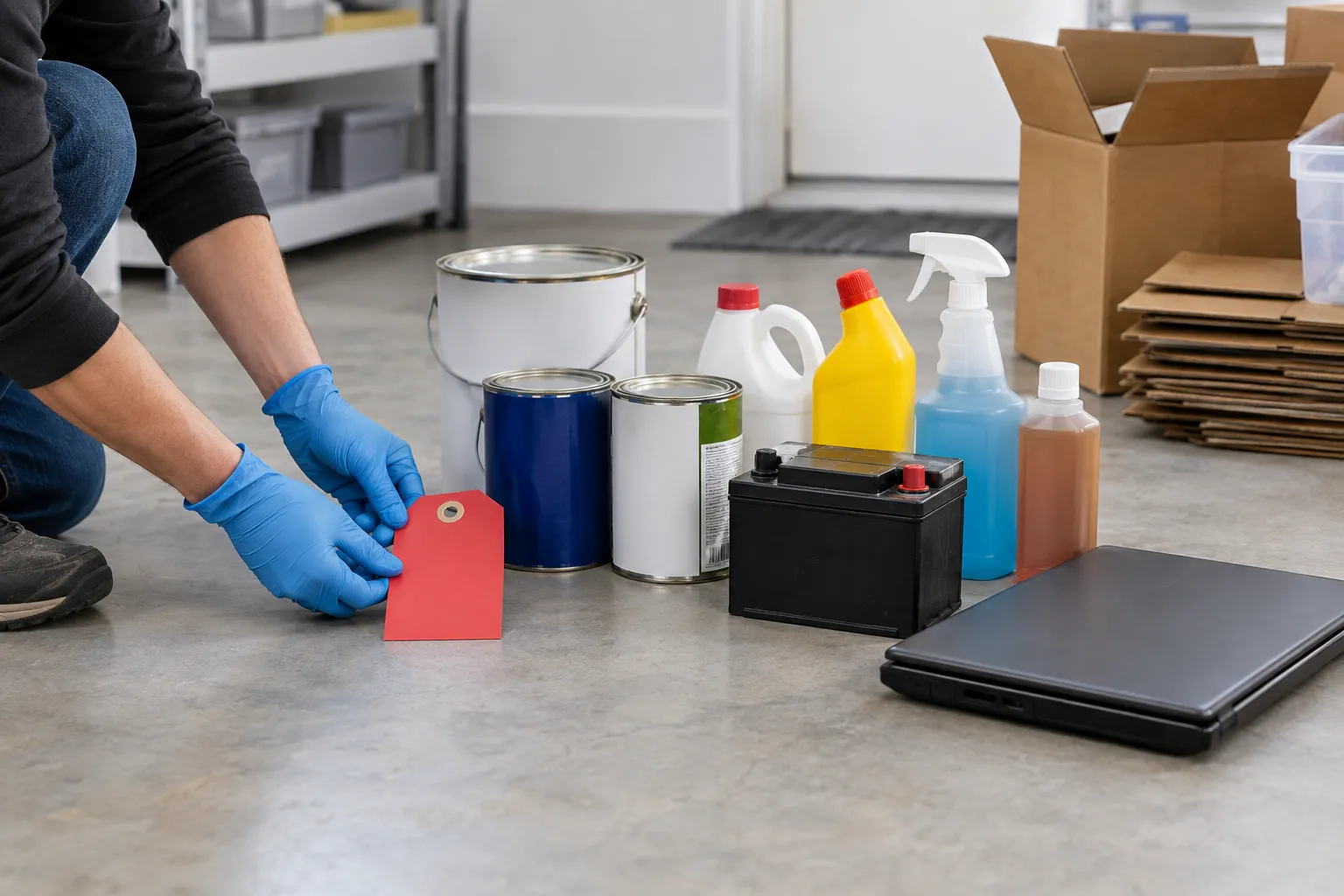
Do not place unknown, leaking, pressurized, chemical, medical, or battery-powered items into an ordinary cleanout pile. Keep them upright, closed, and separate until the responsible local program or service provider confirms the handling route.
Stop loading when the item is uncertain
Create an “ask first” area away from children, pets, heat, drains, and the main carrying path. Do not open containers to identify them by smell. Do not combine products, pour them out, or transfer them into food or drink containers.
Paint, cleaners, oils, pesticides, and similar products
The U.S. Environmental Protection Agency identifies products that may catch fire, react, explode, corrode, or be toxic as household hazardous waste. Its examples include paints, cleaners, oils, batteries, and pesticides. EPA advises keeping products in original containers, following label directions, never mixing leftovers, and asking the local environmental, health, or solid waste agency about area options. Source checked September 18, 2026; U.S. guidance, with local rules still controlling.
| Item group | Keep separate because | First contact |
|---|---|---|
| Paint, solvents, cleaners | Contents may be flammable, corrosive, reactive, or toxic | Local household hazardous waste program |
| Pesticides and pool chemicals | Products can react or require regulated disposal | Local solid waste or environmental agency |
| Motor oil and automotive fluids | Liquids should not enter drains, soil, or ordinary loads | Local collection program or participating retailer |
| Propane and compressed cylinders | Pressurized containers require approved handling | Cylinder supplier or local waste authority |
Electronics and batteries
The EPA electronics donation and recycling guide says to delete personal information before donation or recycling, remove batteries when possible, and check community or state options. It also states that lithium-ion batteries and devices containing them should not go into household garbage or recycling bins. Source last updated December 19, 2025 and checked September 18, 2026; U.S. guidance.
- Erase data from computers, phones, tablets, and storage devices.
- Keep loose batteries out of metal containers and away from keys or other conductive objects.
- Identify swollen, crushed, wet, leaking, or hot batteries immediately and do not place them in the ordinary load.
- Keep old televisions and monitors separate until the destination is confirmed.
Medicines, sharps, firearms, ammunition, and biohazards
These categories do not belong in a general cleanout load. Use law-enforcement, pharmacy, medical-waste, or other responsible programs as applicable. Do not handle firearms unless you are legally authorized and competent to do so. If a property contains needles, bodily fluids, animal waste, mold contamination, or unknown biological material, stop and arrange an appropriate assessment.
Questions to ask before the appointment
- Can this exact item be included in the cleanout?
- Does it need to remain in its original container?
- Should batteries or components be removed?
- Is there a quantity limit or appointment requirement?
- Which local facility or program currently accepts it?
Programs and acceptance rules change. Check the current City of Biloxi, Harrison County, Mississippi Department of Environmental Quality, or EPA information that applies to the material. For ordinary household pieces, continue with the estate cleanout checklist.